Gratitude || How Practicing Gratitude Can Improve Your Life

GRATITUDE

grat・i・tude

noun

the quality of being thankful; readiness to show appreciation for and to return kindness to someone.

Gratitude is often something we express to someone we feel indebted to or when we have benefited from their actions. We usually think of gratitude as a way to show someone our appreciation but we don’t usually think about what the practice of showing gratitude can do for us in return. Research has shown practicing gratitude has many benefits to your health.

Benefits of showing Gratitude

  • It can improve your physical health: those who practice gratitude regularly report fewer physical pains, regular exercise (endorphins), and overall general sense of health than those who don’t practice gratitude.
  • It can improve your mental health: those who engage in regular gratitude practices report a greater sense of overall happiness and reduced symptoms of depression.
  • It can increase empathy and lower aggression: those who regularly show gratitude are less likely to seek revenge on others and are more likely to demonstrate prosocial behaviors.
  • It can improve self-esteem: demonstrating appreciation to others will often make you feel more positive about yourself.
  • It can increase your mental and emotional strength: when you regularly show gratitude, it can improve your resilience and in turn, improving your ability to recover from traumatic situations more quickly.
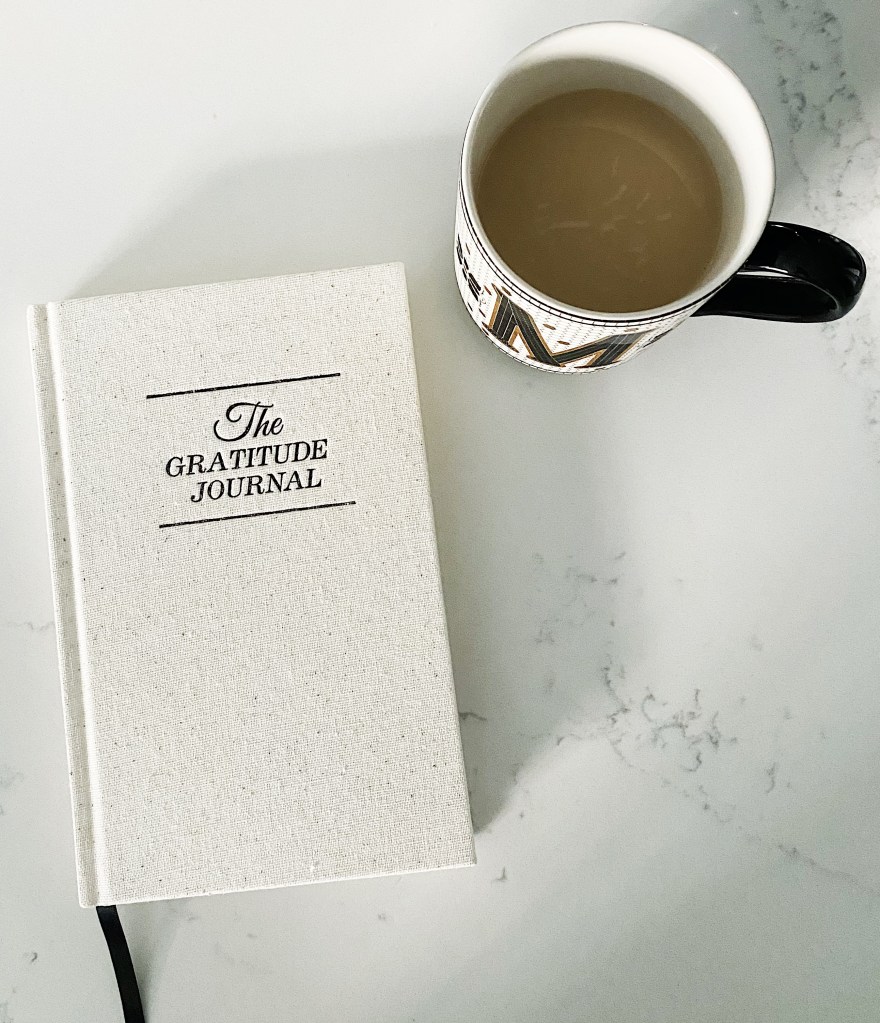
The Gratitude Journal

I started practicing gratitude about 3 years ago + have noticed a tremendous difference in my overall happiness + positivity. I find it much easier to “look on the bright side” even when things don’t seem so bright. In my personal experience, practicing gratitude has had a significant positive impact on my life. While it took awhile to make this a consistent practice, I found that even doing an exercise once or twice a week was helpful. This also improved my ability to note things I’m grateful for when something stressful or unpleasant happens in the moment. I’m able to quickly think of something positive which reduces the impact of whatever negative emotion may arise from the situation.

12 Ways to Practice Gratitude:

There are many ways you can begin practicing gratitude – many can be implemented in routine activities you are already doing.

  1. Journaling: simply list a few things or experiences you’re grateful for + why each day or week. You can purchase a gratitude journal – like mine (pictured + linked above).
  2. Gratitude Prompts: fill-in-the-blank style. For example:
    • I am grateful for these 3 things I see:
    • I am grateful for these 3 things I hear:
    • I am grateful for these 3 animals :
    • I am grateful for these 3 friends:
    • I am grateful for these 3 yellow things:
  3. Gratitude Walk: get in a little exercise + practice gratitude at them same time. As you’re walking, engage in mindfulness practices by observing everything you see, hear, smell, etc. Notice the colors you see, the sounds you hear, the smells of flowers or plants, the feeling of your feet touching the ground with each step, etc.
  4. Gratitude Reflection: similar to a meditation practice, you can sit quietly + focus on your surroundings using your 5 senses. Mentally note something you’re grateful for that you can see, smell, hear, touch, + taste. Next, focus on the people in your life. Who are you grateful for + why? Then, focus on yourself. Think of all your unique traits that make you who you are. Which ones are you most grateful for? Last, focus on life in general. All that life is. All the experiences you have had in life. Which ones are you most grateful for?
  5. Gratitude Letter or Note to a Loved One: you can write a handwritten letter + mail it or text a friend or family member. It can be a simple message like “Hey! I was thinking of you + our memories together. I just wanted to let you know I’m so grateful to have you in my life.”
  6. Begin a Meal With Gratitude: say grace for having a good meal to eat.
  7. During a Meal, Note Your Gratitude For: the flavors, the smell, the view you have while eating, etc.
  8. Gratitude For Things We Often Take For Granted: air conditioning, electricity, shower or bath tub, washer + dryer, cell phones, GPS, a bed to sleep in, etc.
  9. Put Things in Perspective: when something goes “wrong” or you are struggling with a situation, you can reduce the impact of negative feelings by asking yourself what can I learn from this, how can I benefit from this, what good can I take from this? More often than not, there is usually a silver lining. Find the positive, no matter how small it may be.
  10. Ungrateful Thought: acknowledge something you feel ungrateful for. Then, transform it into something you’re grateful for. For example, ungrateful thought: my friend was harsh with me today for no reason. I know she has a lot going on but I don’t deserve to be spoken to that way. Grateful thought: My friend is always there for me when I need her. I’m thankful to have a friend like her.

If you’re struggling to get started or looking for a quick + easy resource, check out this free printable worksheet below (linked)! This website has tons of great worksheets for various topics as well.
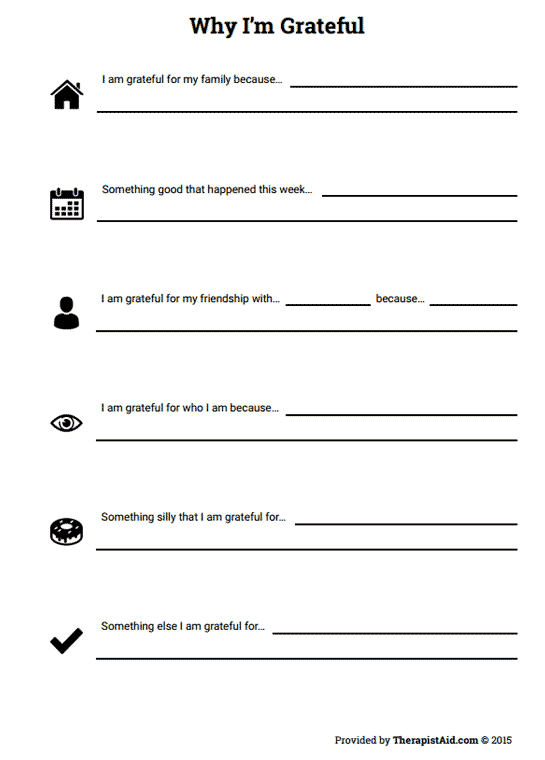
Gratitude Worksheet

My inspiration for this post came from the links below!

Do you practice gratitude? If so, what are your favorite exercises? Share below!

xo, Meg signature

Never Miss A Post + Subscribe Below!

ABC PLEASE

ABC PLEASE || An Acronym To Remember

ABC PLEASE

is a dialectal behavioral therapy skill (DBT) used to improve emotional regulation and combat vulnerability to emotional crisis. DBT was developed by Marsha Linehan, a psychologist and an author. The basis of this skill is taking care of ourselves first so we are able to take care of others in order to build emotional resilience. While this strategy was created to improve emotional regulation skills, this acronym is great for anyone and everyone to use.

A is for ACCUMULATE POSITIVE EMOTIONS AND EXPERIENCES

Life is like a roller coaster. Everyone will have positive and negative experiences. Similar to a monetary savings account, we can build a positive emotion and experience “savings account” to help us recover more quickly from negative ones. It’s important to have both short-term and long-term positive experiences to have an effective “savings account”.

SHORT-TERM EXPERIENCES are activities that we enjoy and can do regularly such as calling a friend or family member, petting our dog, or playing a game with our family. While these things can be done occasionally, the effects wear off quickly. Ideally, we want to do at least one thing daily that will build our “savings account” overtime.

Ideas for High-Energy Short-Term Experiences:

  • Go for a walk
  • Clean the house
  • Organize a drawer or room in your house
  • Play with a pet
  • Garden
  • Explore a new place

Ideas for Low-Energy Short-Term Experiences:

  • Journal
  • Do a craft
  • Read a book
  • Look through photos
  • Plan meals for the week
  • Call or text a friend

LONG-TERM EXPERIENCES are positive experiences that will be more meaningful and will have lasting positive effects. These activities help you create a more meaningful life and will depend on what you value in life.

In order to build long-term positive experiences, consider your values and priorities. Create long-term goals based off the values and priorities you identified. Then, take small steps to achieve your long-term goals by setting short-term goals. Creating smaller goals will give you small steps to focus on daily and will make those long-term goals seem more manageable. Pay attention to your relationships, as our relationships with others heavily influence our overall happiness. Plan time to nurture the relationships you already have and look to build new relationships with others. Avoid giving up – don’t procrastinate dealing with tough emotions or experiences. “Take the bull by the horns” so you can get back to focusing on building the positive experiences without a negative one hanging over your head.

B is for BUILD MASTERY

We build mastery by doing activities that make us feel confident and competent. This can be anything from showering or doing the laundry to practicing an activity you want to become better at. These activities are the ones that make you feel good when you cross them off your to-do list. Try to incorporate one activity that builds mastery each day so the next time a stressful situation arises, you will have an activity to focus on that can assist in alleviating negative or unwanted emotions.

C is for COPE AHEAD OF TIME

Build a plan ahead of time for coping with difficult situations. Just like you would plan for a trip, plan for emotionally distressing situations. When you have a tool box of strategies to pull from, you will be able to recover more quickly from negative experiences. One great strategy is to mentally visualize yourself handling a distressing situation well. You will be more likely to handle it well when you have already visualized it in your mind. You can even create a “self-care” or “coping strategies” tool box. For example, add your favorite candle, bubble wrap or a stress ball, favorite inspirational quotes, and fidget toys to a box you can easily access when a distressing situation arises.

PL is for TREAT PHYSICAL ILLNESS

When we aren’t feeling our best, we are more likely to be emotionally vulnerable and thus, becoming vulnerable to unhealthy coping mechanisms. In order to combat these negative experiences before they arise, we want to treat physical illnesses immediately. If you begin to feel sick, make a doctors appointment. If you’re prescribed daily medications, take those around the same time each day. Be proactive now to avoid being reactive later.

E is for EAT BALANCED MEALS

Eating balanced meals is important to give you sustained energy throughout the day. Make sure to eat three meals daily and try to include protein and vegetables to each meal. Another strategy that works for me is always having a couple of snacks in my bag. I keep Clif bars with me at all times because they always give me a boost of energy if needed.

A is for AVOID MOOD-ALTERING SUBSTANCES

People use mood-altering substances typically because they make us feel good in the short-term. However, in the long-term, these substances have the opposite effect. Alcohol and other substances impede our judgement. We become more likely to make decisions we wouldn’t normally make if we were sober. This can lead to a plethora of negative emotions. Additionally, when used frequently, they can change our brain’s functioning. If we want to build long-term happiness, it’s best practice to avoid mood-altering substances all together. Now this isn’t to say you should never have a drink – there’s absolutely nothing wrong with that. But it’s important to avoid over-indulgence. Become aware of your own limits and stay within those limits to avoid negative experiences and unwanted consequences.

S is for GET BALANCED + ADEQUATE SLEEP

Maintaining a good sleep schedule is imperative to our daily functioning and overall health. It is recommended we get 8 hours of sleep each night; however, everyone is different. Some people can function well on 6 hours while others may need up to 10 hours. Listen to your body and adjust your sleep schedule accordingly. Creating a “wind down routine” is a great way to start building a better sleep schedule that you can look forward to at the end of each day.

E is for GET EXERCISE

Exercise is great for not only our physical health, but also our mental health. When we exercise, our body releases endorphins, a natural anti-depressant. Getting regular exercise – 20 to 30 minutes 3 times per week – is a great way to combat negative emotions and experiences. You don’t have to sign up for a gym membership to get regular exercise. Going for a walk or simply stretching in the comfort of your own home will give you the same results.

PRACTICE these skills each day to build emotional resilience, improve emotional regulation skills, and keep you at your best self. Life is hard for everyone. Make time to take care of yourself so you can feel your best and be at your best. A bonus: you will feel more confident being YOU!

To learn more about ABC PLEASE, check out the links here, here, and here.

Will you be implementing ABC PLEASE skills into your life? What are your favorite coping strategies for distressing situations? Comment below!

xo, Meg signature
7 Pillars Of Self Care

Self-Care || What It Is + How To Build Your Own Self-Care Routine

What is self-care?

Self-care is defined as the practice of taking action to preserve one’s own health. It is not synonymous with self-indulgence or selfishness. Self-care means taking care of yourself so you can do your job, you can help others, you can be healthy, and you can do all the things you need and want to accomplish in a day. It promotes healthy functioning and enhances your overall well-being. It’s just like when a flight attendant reviews the procedure of using oxygen masks in case of emergency. You’re instructed to put your mask on first before helping others because you won’t be able to help others if you aren’t able to breathe. The same principle applies to self-care. You must take care of yourself first so that you can be at your best self to help others.

You can’t pour from an empty cup. Fill your cup first.

Joseph Fleming

Additionally, you must take care of yourself for your health and well-being. Your needs are equally important to those around you and you owe it to yourself to take care of YOU so you can feel good about yourself!

Self-care will look different and mean something different to everyone. However, at the end of the day, it’s about doing anything that feels nourishing to you.

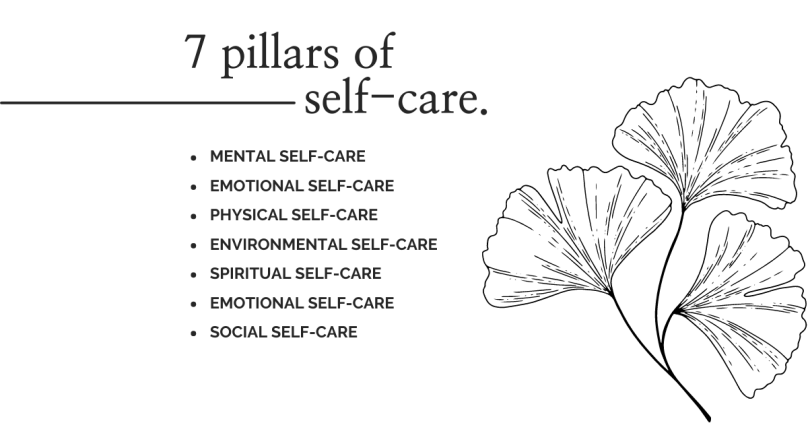
There are 7 pillars of self-care:

  1. Mental
  2. Emotional
  3. Physical
  4. Environmental
  5. Spiritual
  6. Recreational
  7. Social

We want to maintain somewhat of a balance among these pillars. This list may be overwhelming but you don’t have to tackle them all at once. You can choose one area to focus on for a few weeks then add another area as you go. The goal is about finding a balance that works for you. For example, some people don’t need as much social interaction as others. You may feel balanced by spending time with your friends once or twice a month; whereas, someone else may need more social interaction, like once or twice per week. It’s okay if your idea of self-care looks totally different than someone else’s. The most important thing is staying mindful and paying attention to which areas are in need of attention so all areas don’t begin to collapse.

Let’s talk about each pillar:

Mental Self-Care

Mental Self-Care, or intellectual self-care, is about cultivating and attending to a healthy mindset. This one is important so you can develop a healthy mindset and continue to grow your skills, learn new skills, and enhance knowledge.

Ideas:

  • Reading a book
  • Writing in a journal
  • Meditation + mindfulness
  • Writing a to-do list or brain dump
  • Taking a break from social media and the internet
  • Continuing education courses in your field of expertise
  • Trying a new activity to engage your brain in a new way

Emotional Self-Care

Emotional Self-Care is about learning healthy coping strategies and implementing them when emotional matters occur. It’s also about figuring yourself out so you can understand yourself better and develop healthy emotional responses. Self-compassion is important to practice as well.

Ideas:

  • Setting boundaries
  • Positive affirmations
  • Making a gratitude list
  • Asking for help if you need it
  • Listening to your favorite songs

Physical Self-Care

Physical Self-Care seems a little obvious: exercising, eating nutritious meals, and basic hygiene. What many people don’t know is it is also about sleeping well and keeping up with doctor’s appointments. It can also include health literacy. For example, reading up on a diagnosis and learning ways to minimize issues with the diagnosis.

Ideas:

  • Going for a walk
  • Drinking more water
  • Eating at regular times
  • Sleeping 7-8 hours each night
  • Taking medication and vitamins
  • Exercising – I’ve been using ClassPass to try different workouts lately (highly recommend)

Environmental Self-Care

Environmental Self-Care is simply taking care of the spaces around you. For example, keeping a clean house or decluttering your pantry or closet. It can also include exploring a new place in your community.

Ideas:

  • Clean out your closet
  • Organizing your work space
  • Establish a basic cleaning routine
  • Explore a place you’ve been wanting to go
  • Appeal to your 5 senses – put on your favorite music, light a candle, sip on warm tea or cold water with lemon, adjust the lighting, and slip into a comfy outfit (great daily wind-down routine)

Spiritual Self-Care

Spiritual Self-Care is about taking care of your soul – finding activities that give you a sense of purpose and add meaning to your life. It doesn’t have to include religion if that’s not something your into.

Ideas:

  • Meditation
  • Identifying your values
  • Prayer or connecting to a higher power
  • Spending time in nature or with animals
  • Volunteering for a cause meaningful to you

Recreational Self-Care

Recreational Self-Care is about connecting with your inner child by doing something fun and trying new experiences. This allows you to disconnect from the daily routine of life and all the things on your to-do list.

Ideas:

  • Playing a game
  • Recreational sports
  • Doing absolutely nothing
  • Any hobby or activity that brings you joy
  • Going on an adventure or exploring a new place
  • Anything that will switch up your daily routine allowing for “fun” time

Social Self-Care

Social Self-Care doesn’t sound like a typical part of “self-care”, but it is important to spend time connecting with others. This brings a sense of belonging and acceptance.

Ideas:

  • Visiting a friend
  • FaceTime or call a loved one you don’t see often
  • Joining a club – volunteer groups, recreational sports, etc.
  • Finding a community or support group to get involved with
  • Spending time with friends, family, or anyone you enjoy being around

Benefits of Self-Care

There are so many benefits of self-care practices – from reducing anxiety, depression, burnout, and stress to increasing energy and overall happiness. Not to mention, research has shown long-term effects of self-care practices are invaluable. Click here and here for a couple articles outlining all the major benefits.

The National Institute of Mental Health also has a wonderful article regarding self-care linked here.

Additionally, I found two other great articles for your reference on Psychcom and Psychology Today linked here and here.

How to Build Your Own Customized Self-Care Routine

When I was beginning to really focus on my personal self-care routine, I used the article here to guide me. I found the steps outlined to be incredibly helpful. I have listed them below for your reference.

  • Assess your needs – make a list of all the major categories in your life such as school or work, family, friends, pets, and physical health.
  • Consider your stressors – determine which areas of your life contribute to stress and think about or research ways to manage that stress.
  • Devise self-care strategies – consider activities that can help you feel better in each area. For example, if you struggle remembering to drink enough water throughout the day, set a reminder on your phone that will persist on your Home Screen throughout the day.
  • Plan for challenges – there will always be challenges. If you notice one area is being neglected, create a new plan of action.
  • Take small steps – trying to tackle everything all at once will more than likely be overwhelming. Choose one area to focus on improving for a month. Set goals. Then, add another area the next month.
  • Schedule time to focus on your needs – add self-care time into your planner and keep track of your progress towards each goal.

A Look at My Self-Care Plan:

At the beginning of the year, I sat down and determined my “focus” for the year. I made boundaries, discipline, and self-care my top priorities. Then, I listed each major area of my life. Within these areas, I listed 3-5 goals to focus on. Some of these goals were already in progress, but I know I have a tendency to slack off as life gets busy so I kept them on my list to track maintenance. Take a look out my outline below:

  • PROFESSIONAL
  • PERSONAL
  • SPIRITUAL
  • RELATIONSHIPS
  • FINANCIAL

I did not include my personal goals in each area because well, they’re personal – but I chose to focus on professional and personal goals first. I chose one or two goals from each area that were of utmost importance to me to improve and I focused on those for the month of January. In February and March, I incorporated two more goals goal from both categories. I still track my progress in the other areas and use that to choose my focus for the next month. So far, this is helping a ton in terms of creating stronger boundaries with others and myself, re-cultivating discipline back into my life, and taking care of myself and well-being through self-care practices.

This can seem daunting at first – it was for me. However, I will say I have maintained this system for the first 3 months of the year and I feel much better overall. I also included little ways to celebrate when I reach a goal. This gives me something additional to look forward to. It took a little trial-and-error, but I found what works for me. I highly recommend giving this a try if you’re looking to improve your self-care practices!

If you would like some other suggestions or want to share your own personal suggestions, leave a comment below!

xo, Meg signature
Monat Wellness

Monat || My Favorite Wellness Products

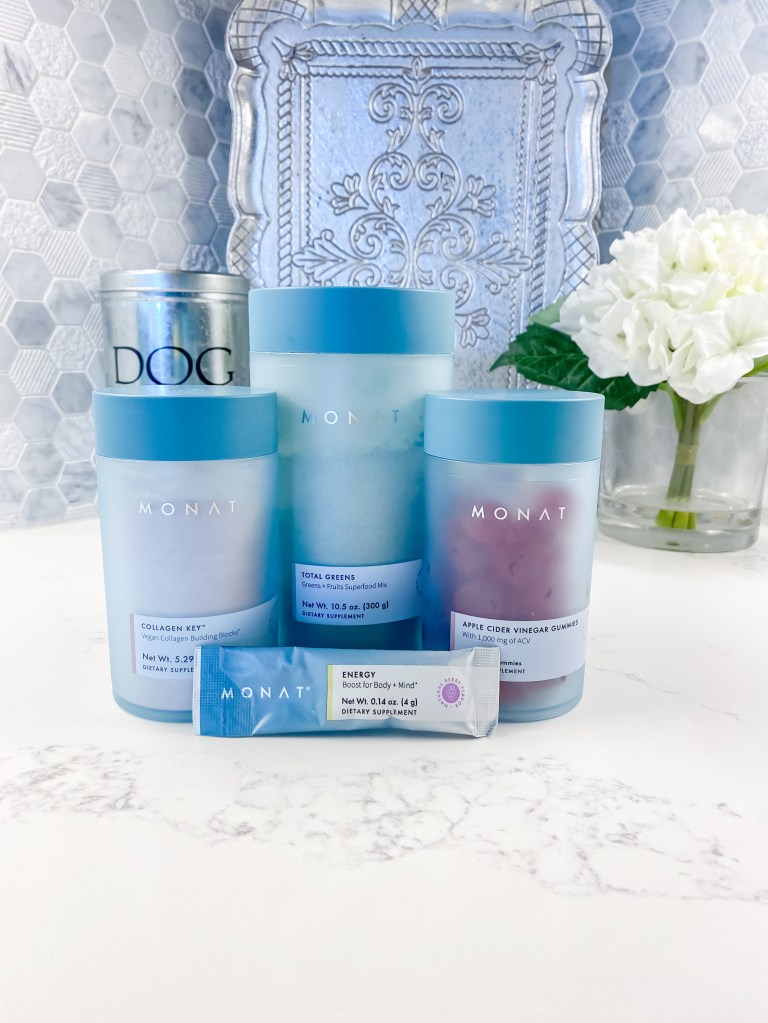
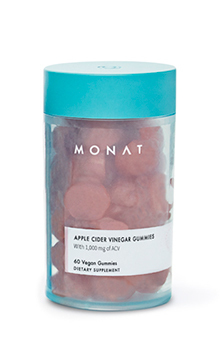
We have 8 wellness products to choose from targeting different areas of wellness. I have 4 favorites I use daily including our Total Greens, Collagen Key, Energy, + Apple Cider Vinegar Gummies.

Total Greens is great for those who don’t get their daily dose of veggies. Collagen Key supports and improves the production of collagen. Our Energy is a healthier alternative to coffee, giving you the boost you need to start your day without the crash later. Apple Cider Vinegar Gummies also improve energy + support overall wellness.

Monat Wellness Faves

MY DAILY WELLNESS LINE UP:

  1. Total Greens
  2. Collagen Key
  3. Energy
  4. ACV Gummies

I typically make a little wellness cocktail by mixing Total Greens, Collagen Key, + Energy with water first thing in the morning. Then, I take my ACV Gummies afterwards! It is the perfect way to start my morning off right!

To check out all of our wellness products, click here! If you’re interested in trying one of our wellness products, leave a comment below!

xo, Meg signature
Headspace Reminder

Headspace

The Mindfulness Meditation App

Headspace is the perfect app for guided meditations. It has a plethora of resources including options for sleeping, moving your body, focusing, and general meditating. Additionally, it pulls choices from the library for a “start your day”, “afternoon lift”, and an “at night” section on the home page. You can log your progress regarding reducing stress and anxiety management in the app every 2 weeks as well. One caveat is you have to buy the annual subscription of $70.

Headspace App

Years ago, someone told me about this app and I considered it. At the time, however, I was unwilling to spend $70 on an app I felt certain I wouldn’t use. With that being said, I have struggled with my ability to fall asleep for years. I have tried everything from essential oils, medication, melatonin, Benadryl, literally everything you can possibly think of. My struggle to fall asleep has negatively impacted my daily life as you can probably imagine. I was desperate to find something that worked for me. One day I was scrolling through my instagram feed and noticed an ad for Headspace. I had forgotten all about this app until that day. I figured I might as well give it a try since nothing else had worked well for me.

I began my 7-day free trial and chose the sleepcasts option which are essentially calming visualization stories narrated by someone soft-spoken with peaceful sounds in the background. The narrators all go through guided wind-downs with you prior to beginning the stories. The wind-downs range from breathing exercises, “noting”, or visualizing. I was SO amazed by how quickly I was able to fall asleep!!! I normally lay for hours before I am finally able to drift off to sleep. With headspace, I have been able to fall asleep within 15 minutes most nights.

Since I was enjoying the sleepcasts so much, I began using other features within the app. Each option I have tried has been so helpful in keeping me grounded throughout the day. I often use the afternoon lifts on my lunch break or while I’m in the car traveling from one work location to another. I can’t recommend this app enough. It is truly the best $70 I have ever spent.

There are many free apps out there with similar features and functions. I recommend looking through the App Store prior to spending money on Headspace. You may be able to find something that works for you free of charge. I personally tried several other apps first but didn’t find what I was looking for. In my opinion, Headspace is the easiest to use and the quality of content is significantly better than others I tried.

Feel free to share your favorite meditation apps in the comments!

xo, Meg signature