GRATITUDE
grat・i・tude
noun
the quality of being thankful; readiness to show appreciation for and to return kindness to someone.
Gratitude is often something we express to someone we feel indebted to or when we have benefited from their actions. We usually think of gratitude as a way to show someone our appreciation but we don’t usually think about what the practice of showing gratitude can do for us in return. Research has shown practicing gratitude has many benefits to your health.
Benefits of showing Gratitude
- It can improve your physical health: those who practice gratitude regularly report fewer physical pains, regular exercise (endorphins), and overall general sense of health than those who don’t practice gratitude.
- It can improve your mental health: those who engage in regular gratitude practices report a greater sense of overall happiness and reduced symptoms of depression.
- It can increase empathy and lower aggression: those who regularly show gratitude are less likely to seek revenge on others and are more likely to demonstrate prosocial behaviors.
- It can improve self-esteem: demonstrating appreciation to others will often make you feel more positive about yourself.
- It can increase your mental and emotional strength: when you regularly show gratitude, it can improve your resilience and in turn, improving your ability to recover from traumatic situations more quickly.
I started practicing gratitude about 3 years ago + have noticed a tremendous difference in my overall happiness + positivity. I find it much easier to “look on the bright side” even when things don’t seem so bright. In my personal experience, practicing gratitude has had a significant positive impact on my life. While it took awhile to make this a consistent practice, I found that even doing an exercise once or twice a week was helpful. This also improved my ability to note things I’m grateful for when something stressful or unpleasant happens in the moment. I’m able to quickly think of something positive which reduces the impact of whatever negative emotion may arise from the situation.
12 Ways to Practice Gratitude:
There are many ways you can begin practicing gratitude – many can be implemented in routine activities you are already doing.
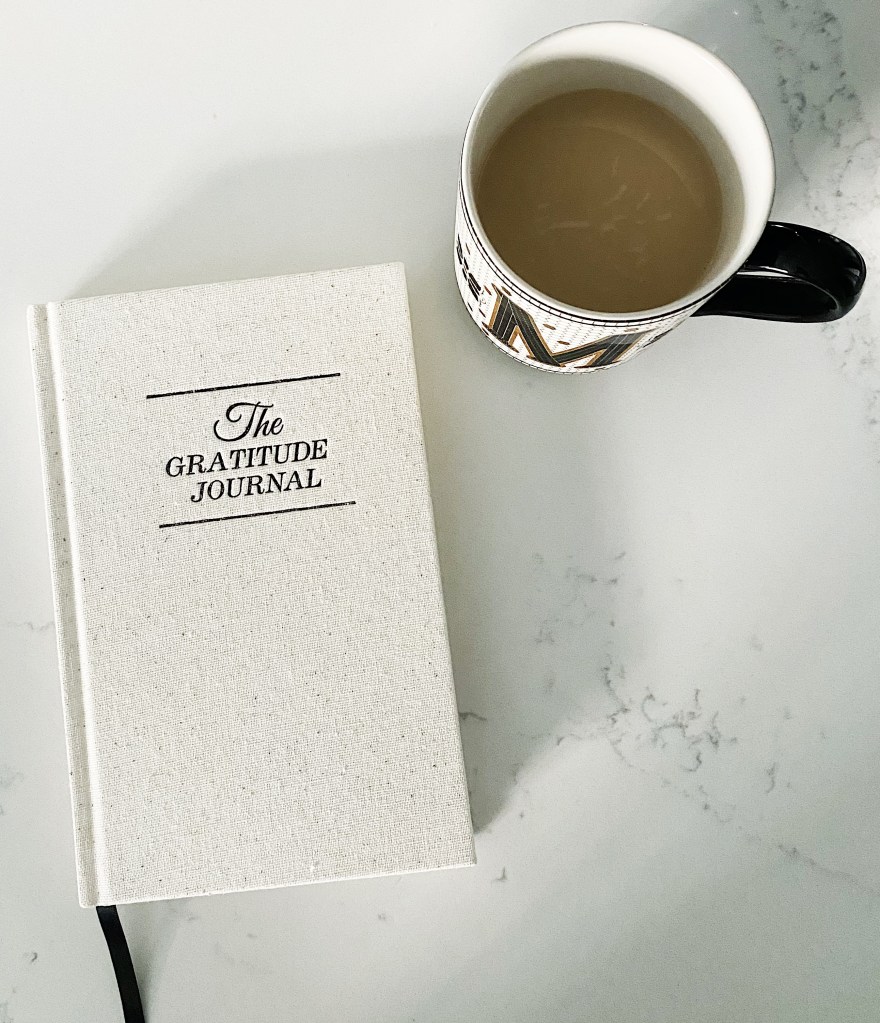
- Journaling: simply list a few things or experiences you’re grateful for + why each day or week. You can purchase a gratitude journal – like mine (pictured + linked above).
- Gratitude Prompts: fill-in-the-blank style. For example:
- I am grateful for these 3 things I see:
- I am grateful for these 3 things I hear:
- I am grateful for these 3 animals :
- I am grateful for these 3 friends:
- I am grateful for these 3 yellow things:
- Gratitude Walk: get in a little exercise + practice gratitude at them same time. As you’re walking, engage in mindfulness practices by observing everything you see, hear, smell, etc. Notice the colors you see, the sounds you hear, the smells of flowers or plants, the feeling of your feet touching the ground with each step, etc.
- Gratitude Reflection: similar to a meditation practice, you can sit quietly + focus on your surroundings using your 5 senses. Mentally note something you’re grateful for that you can see, smell, hear, touch, + taste. Next, focus on the people in your life. Who are you grateful for + why? Then, focus on yourself. Think of all your unique traits that make you who you are. Which ones are you most grateful for? Last, focus on life in general. All that life is. All the experiences you have had in life. Which ones are you most grateful for?
- Gratitude Letter or Note to a Loved One: you can write a handwritten letter + mail it or text a friend or family member. It can be a simple message like “Hey! I was thinking of you + our memories together. I just wanted to let you know I’m so grateful to have you in my life.”
- Begin a Meal With Gratitude: say grace for having a good meal to eat.
- During a Meal, Note Your Gratitude For: the flavors, the smell, the view you have while eating, etc.
- Gratitude For Things We Often Take For Granted: air conditioning, electricity, shower or bath tub, washer + dryer, cell phones, GPS, a bed to sleep in, etc.
- Put Things in Perspective: when something goes “wrong” or you are struggling with a situation, you can reduce the impact of negative feelings by asking yourself what can I learn from this, how can I benefit from this, what good can I take from this? More often than not, there is usually a silver lining. Find the positive, no matter how small it may be.
- Ungrateful Thought: acknowledge something you feel ungrateful for. Then, transform it into something you’re grateful for. For example, ungrateful thought: my friend was harsh with me today for no reason. I know she has a lot going on but I don’t deserve to be spoken to that way. Grateful thought: My friend is always there for me when I need her. I’m thankful to have a friend like her.
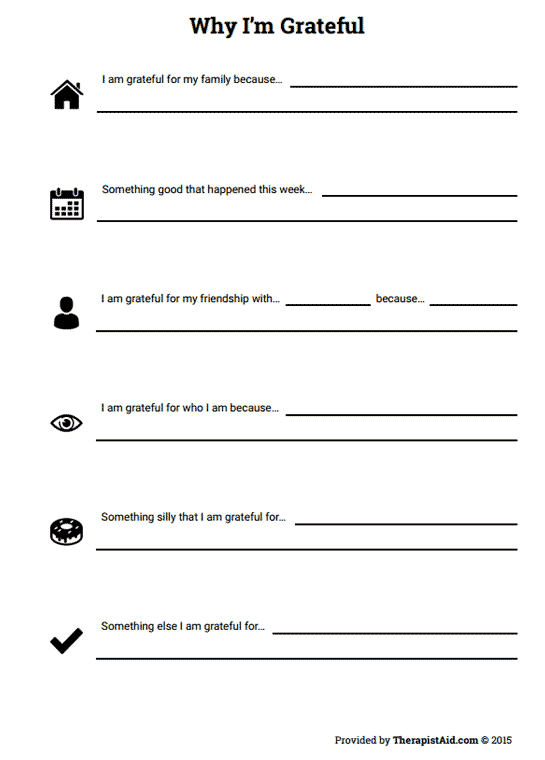
If you’re struggling to get started or looking for a quick + easy resource, check out this free printable worksheet below (linked)! This website has tons of great worksheets for various topics as well.
My inspiration for this post came from the links below!
Do you practice gratitude? If so, what are your favorite exercises? Share below!

 Main + Meg