"Toxic" People

Defining “Toxic” People

What does it mean to be a “toxic” person?

I have grown to despise this term more and more as of lately. In our world today, the word “toxic” is overused and often an excuse to avoid accountability for our own behavior. We all exhibit toxic behaviors from time to time. Expecting a person to act and behave perfectly all of the time is completely unrealistic, especially if a person is going through a difficult period in their life or under a lot of stress. We don’t always know when someone is going through a difficult period of life or in stressful situations. It is important to acknowledge that we may not have the full story so we must be willing to show grace and compassion for others when they are demonstrating toxic behaviors. Not all people are even aware of their toxicity. Some people are more focused on other’s toxicity rather than their own – but with time, many people are able to self-reflect and work towards self-improvement rather than focusing on how other people may need to improve. However, what sets a true “toxic” person apart from the average person is their consistent negative behaviors over a long period of time. True toxicity exists when a person is unwilling to acknowledge and improve their behavior. Truly toxic people expect others to constantly work on their behavior but never work on improving their own. Once you improve your weak areas, they move the goal posts and expect more and more out of you while giving nothing in return.

Another point worth mentioning is that our perception of a person’s behavior is not always accurate. For example, we may perceive a shy person as rude and unfriendly when in reality they may be afraid of being judged so they shy away from social interactions with people they don’t know very well. In addition, we must become aware of our personal “triggers” and understand that just because someone triggers us, does not mean they are a negative or toxic person. Make sure to consider the other person’s intention and your own pain before writing someone off as “toxic”.


Most Common Traits of Highly Toxic Individuals

In order to identify a highly “toxic” person, we must know what to look out for. See the list below for the most common toxic traits:

  1. Toxic people are manipulative. Period. They use anyone and everyone in their life to achieve their own selfish desires. They do not care what you want and will not consider your wants or needs. They may seem to in the beginning, but that is part of how they manipulate you. They essentially groom you to buy into their facade so they can take full advantage of you later on. Often, these individuals are skilled manipulators and have been perfecting their craft for years; therefore, it is likely you may not even realize it until much later on.
  2. Toxic people are judgmental. When you first get to know a person, pay attention to how they criticize others to their face and behind their back. Before long, they’ll be doing the same to you. Their focus will be on what you’ve done or what you didn’t do – it will never be about them. If you ever try to hold them accountable, expect an intense reaction.
  3. Toxic people take no responsibility for their own feelings. They project their feelings onto you. More simply, this means the toxic person will unconsciously take their unwanted emotions or traits they do not like about themselves and attribute them to you. They may even behave in a particular way to evoke a negative response from you so they can blame you for your reaction or response. If you question them, they will defend themselves and their perspectives forevermore. They will not take responsibility for what they have done. If they do, it will either benefit them in some way or be a set up for future manipulation.
  4. Toxic people do not apologize. Everything will always be someone else’s fault. If they do apologize, it will be a poor excuse for an apology and they will not make any effort to improve their behavior. They may even go so far as to play victim in order to gain sympathy and attention from others.
  5. Toxic people are inconsistent. They are not the same person every time you are with them. Notice how their personality shifts depending on their audience. If they have a motive or want to accomplish something from a situation, their attitude, behavior, and perspective may drastically change. They know how to turn on the charm when they want something from you.
  6. Toxic people make you prove yourself to them. This can be done in various ways and in various situations from mild to extreme. For example, they may ask you where you want to go for dinner. When you tell them where you’d like to go, they will make an excuse as to why they don’t want to go there – “I just had that last week; we can go anywhere but there” or “ugh, I hate that place” – when they go there with their friends all the time. They essentially force you to conform to their wants, needs, or desires. In the most severe circumstances, this can turn into a “divide-and-conquer” situation where the only choice is them, even if that means severing ties with other close relationships you may have.
  7. Toxic people make you defend yourself. Healthy people are interested in compromising and resolving conflict so that everyone can be satisfied. Toxic people are only interested in satisfying themselves. They do not care about your point of view or resolving an issue. They will manipulate you by being vague, playing victim, and diverting attention away from the issue. They will focus on how you’re discussing the issue – your tone, your demeanor, your words, etc. Their focus is on problems, never a solution.
  8. Toxic people are not caring, supportive, or interested in what is important to you. They will always find a way to divert the attention back to them. If bad things happen to you, something worse happened to them. If good things happen to you, something better happened to them. If you’re having a struggle in a certain area of your life, they will go on and on about how great that area of their life is OR how their situation is worse. If you have plans with them, they ditch you when a more exciting opportunity comes along. If you are talking about something you are passionate about, they change the subject. They make sure the attention is always on them. Often, they will appear uninterested during conversations where the attention is on someone else.

While many traits are listed above, this is certainly not all of them – these are just the most common. I saw the list below in a post on Instagram which indicates more specific qualities often seen in toxic individuals.
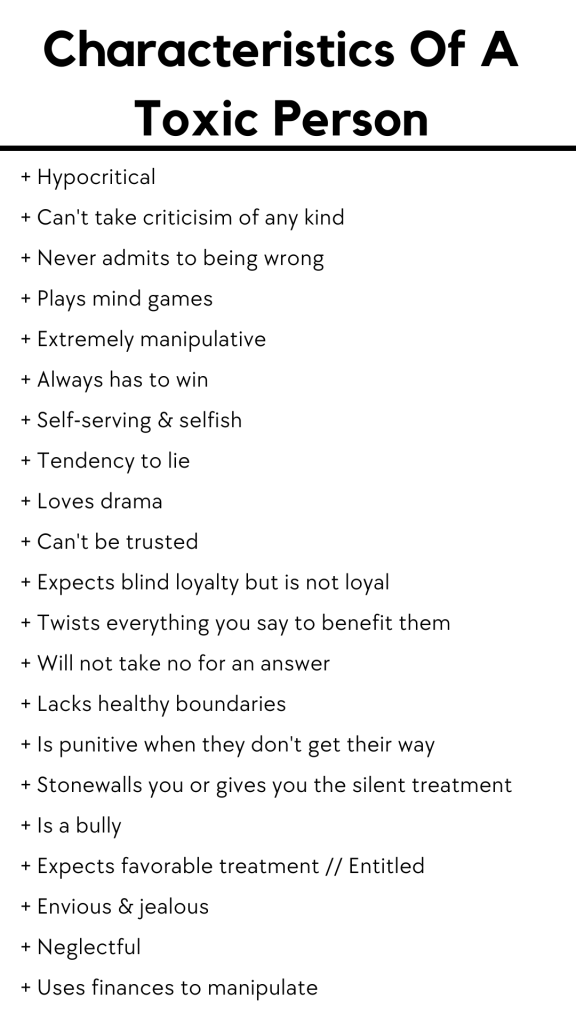

Characteristics Of A Toxic Person

Final Thoughts

To reiterate, we all demonstrate toxic behaviors at some point in our lives and that is okay. We are only human. When we take the time to self-reflect and make an effort to become more aware of our own toxicity, we can better ourselves and be better to those around us. Most people do not want to hurt others and will give effort to better themselves so they don’t continue to hurt people in their lives. Unfortunately, there are people in the world who refuse to take responsibility for their own actions and behaviors and they don’t care if they hurt you. Sure, they may not necessarily “want” to hurt you, but they don’t care enough to make an effort not to. These people are unhealthy to have any type of close relationship with. They will make you feel unheard, unseen, and unimportant – just so they can feel heard, seen, and important. People can always change, but highly toxic people generally do not.

In addition, a person can be “toxic” to one person, but seemingly not to another. How? Well, it is actually quite simple. Individuals that they do not appear toxic to are the people they can continue to gain an advantage from. At their very core, toxic people are skilled manipulators lacking the ability to care for or truly empathize with another person. Every person in their lives are on puppet strings and they are the puppet master. They get a thrill of being able to take advantage of other people for whatever reason it may be. They love knowing they can control other people without them even noticing. They may even be able to show “empathy” in situations, but this is usually due to their observation of other people’s behavior. They learn how to fake empathy and are able to imitate what they have seen others do. Truly toxic people will be on their best behavior around those they can gain any advantage from – no matter how big or small that advantage may be. Once they can no longer gain anything from you, they will begin to treat you badly or just forget you exist all together – because your existence no longer serves them. Beware of these people and keep distance from them. Find people who truly care about you, who will not use you to their advantage, who will uplift you, and who want to see good things happen to you. Don’t waste anymore time on those who don’t.

This article served as a guide for this post.

Take Care Signature
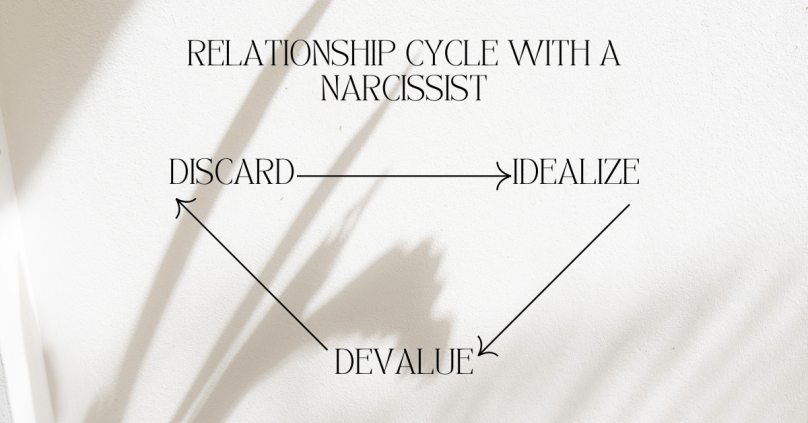
Relationship Cycle With A Narcissist

Relationship Cycle With A Narcissist

Idealize + Devalue + Discard

In my research and readings of narcissism, I learned there is a typical relationship cycle when dealing with a narcissist – idealize, devalue, and discard. This cycle is devastating to the narcissist’s partner and can quite literally destroy him or her on a mental and emotional level. It is also emotional and psychological abuse. Each phase includes a specific set behaviors which are all done in order to manipulate and extract narcissistic supply.


Idealize

The idealization phase is much like the “honeymoon” phase of any typical relationship. What sets this phase apart from a typical relationship is the level of intensity. In the beginning of a relationship with a narcissist, individuals may feel as if they have found their soulmate, often describing the love they have found as “otherworldly” – something they only could have imagined in their wildest dreams. The narcissist puts their partner on a pedestal, also referred to as “love bombing” – flooding you with compliments, “showing you off” to all their friends, wanting to spend excessive amounts of time together, and making promises of a future together. You will essentially feel like you are the most special person in their life. This phase can last from a few weeks to as much as a year. Then, the narcissist will begin chipping away at you – piece by piece.


Devalue

The “devalue” phase is exactly what it sounds like. Devaluing you, or throwing you off of the invisible pedestal they initially put you on. This typically begins happening when the relationship becomes comfortable and the narcissist begins to see that you are not “perfect”, that you are human and have flaws just like everyone else. It typically begins very slowly and covertly but builds with time – putting you down, gaslighting, withholding emotional or physical intimacy, disappearing from contact, projecting, and blaming you for anything that does not go his or her way. Again, this cycle typically begins very slowly and increases in frequency as the relationship continues. The narcissist will give his or her partner intermittent reinforcement throughout this phase which includes various “love bombing” behaviors from the idealization phase. The partner will often continue to stay in the relationship even as the frequency of devaluing behaviors increase for a few major reasons: 1.) the individual sees the “good” side of the narcissist, or the “potential” of a promising future, 2.) the narcissist has made the partner feel the need to “prove” his or her value and worthiness, and 3.) this cycle actually begins to rewire your brain – also known as “trauma bonding”.


Discard

The discard phase is when the narcissist ends the relationship. Typically, the discard will occur when the partner begins asking for compromise, reciprocity, honesty, and boundaries – all of which are reasonable and healthy relationship requests. When the relationship beings to require any effort on the narcissist’s end, he or she often decides the relationship has “expired”. Narcissists require excessive amounts of attention, whether that be positive or negative, to essentially “fill up” their ego tank. Relationship partners serve as a constant, stable source of supply. When the narcissist becomes bored of the main source of supply and can no longer get away with their negative behavior, that source of supply is no longer deemed “valuable”; therefore, the narcissist discards the relationship partner. The discard often occurs unexpectedly in an egregious form of emotional abuse. The partner is left appalled and bewildered, unable to understand how someone who he or she loved so much could throw their entire relationship away.

Once the discard has taken place, the narcissist may begin to “hoover” to maintain his or her narcissistic supply. This generally happens when the partner decides to end the relationship before the narcissist has the chance to discard; however, hoovering can occur months, even years, after the initial discard regardless of who initiated the discard. Sometimes, the discard happens in a way that leaves “hope” for the relationship in the eyes of the partner, which can essentially extend the discard phase much longer, leading to an even more malicious final discard.

The discard often includes triangulation with a new partner. The narcissist will be on the hunt for a new source of primary supply long before the relationship ends. Often, narcissists will be involved (talking to and/or physically engaging) with other women or men throughout the relationship, as this feeds their ego and serves as another source of supply. Sometimes, they may use one of these individuals as a main source of supply after the discard. Other times, they will begin hunting for a new primary supply once the current partner begins requesting effort, despite having other sources of secondary supply. After the discard, this new supply will become their main source; thus, “triangulating” the old partner.

When the old partner sees the narcissist with a new partner shortly after the discard, it causes an even greater sense of emotional turmoil. The old partner is left believing all the negative statements that the narcissist previously said or implied – you’re too sensitive, you’re a miserable person to be around, you have major character flaws, you always start an argument, you are exhausting to be with – how else could he or she have moved on so quickly? The previous partner will often ruminate on these overly harsh criticisms and may even begin to believe they are worthless and unlovable. This is extremely damaging and emotionally traumatic for the old partner, often leaving them depressed and full of anxiety. In the worst cases, victims will begin having suicidal thoughts or committing suicide because they feel so worthless and unlovable as a result of the abuse.


Final Comments

This type of relationship cycle is torturous. Many people who have not experienced this type of abuse would say physical abuse is “worse” but just because the damage is not visible does not mean it isn’t equally painful. Some may argue that you should have left sooner or tell you that you’re “stupid” for getting back together with your abuser. Yet, when you’re in the situation, it is extremely difficult to end the relationship and cut all forms of contact. You may be thinking well, why is it so hard when you’re being treated badly? The trauma bond formed early on in the relationship alters brain chemistry to function similarly to that of an addict. You being to crave those emotional “highs”, so you push through those “lows” to get that next “hit”. Of course there are other contributing factors, but I believe this one has the greatest impact.

If you feel you are experiencing emotional abuse, I recommend seeking therapy immediately. Do your research and find a therapist, psychologist, or counselor who is trained in emotional abuse recovery. If not properly trained and unaware of the patterns and characteristics of emotional abuse, he or she may do more harm than good.

Take Care Signature
Types Of Narcissism

Types Of Narcissism

Yes, there are types!

Today, I am sharing an article defining the 8 sub-types of narcissism. I have read several different articles on this topic, but this article explained each type in a concise, numbered list and included all currently defined sub-types.

This is a brief, but interesting read. As you will see, narcissism comes in many different forms. Please keep in mind there is a difference between narcissism and typical, healthy “narcissistic” behavior.

Key point: Narcissists use manipulation as a means to an end. Healthy individuals do not.

Check out the article here.

Take Care Signature
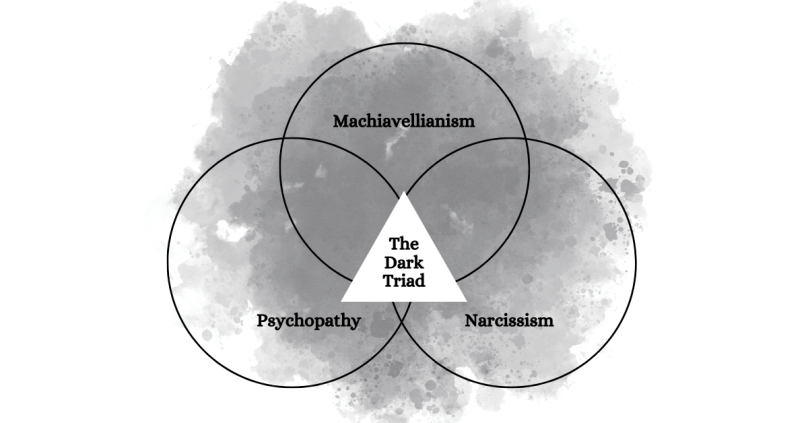
The Dark Triad

The Dark Triad Personalities

What is the Dark Triad?

The Dark Triad Traits

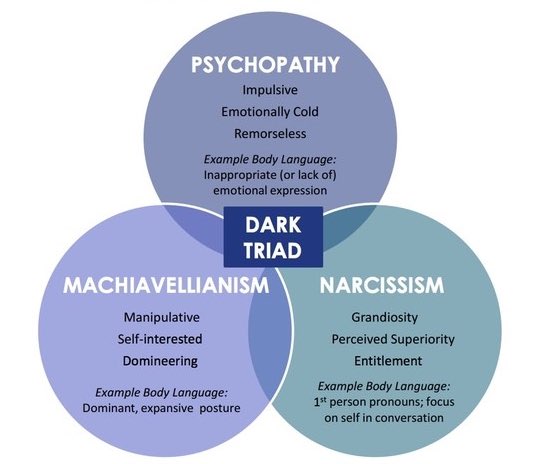
The Dark Triad, a term coined by Paulhus and Williams in 2002, typically refers to three severely negative personality traits – narcissism, Machiavellianism, and psychopathy. “Dark Triad” refers to individuals who possess these negative traits, but may not necessarily present with a diagnosis of a full-blown personality disorder.

All three of these negative personality types (further described below) are generally marked by varying degrees of aggression motivated by self-interest, lack of empathy, and skilled manipulation.


Narcissism

Narcissism is a term often used to describe someone who is generally self-centered or obsessed with their appearance. In the dictionary, this term is defined as “excessive interest in or admiration of oneself and one’s physical appearance”. However, when we are speaking of personality traits as a whole, narcissism embodies much more than that. Below is a list of narcissistic traits, as found on Medical News Today (link also provided below):

  • An insatiable appetite for the attention of others
  • Extreme feelings of jealousy
  • An expectation of special treatment
  • Exaggerating achievements, talents, and importance
  • Extreme sensitivity and a tendency to be easily hurt and to feel rejected with little provocation
  • Difficulty maintaining healthy relationships
  • Fantasizing about their own intelligence, success, power, and appearance
  • An ability to take advantage of others to achieve a goal, without regret or conscience
  • A lack empathy, or ability to understand and share the feelings of others, and a tendency to disregard others’ feelings
  • A belief that only certain people can understand their uniqueness
  • A tendency to consider themselves as skilled in romance
  • Responding to criticism with anger, humiliation, and shame
  • Seeking out praise and positive reinforcement from others
  • An expectation that others will agree with them and go along with what they want
  • Whatever they crave or yearn for must be “the best”

Click here to read more.

Most people would identify with a few of these traits at some point or another in their life. For example, I identify with “seeking out praise and positive reinforcement from others” sometimes, especially when I’m not feeling confident about something – whether that be appearance or certain skills with my job. I also identify with “responding to criticism with anger, humiliation, and shame” sometimes, especially when the criticism is unnecessarily harsh. Does that make me a narcissist? Absolutely not. Identifying with some of these traits is completely normal. We all have some narcissistic tendencies from time to time and that is okay! However, it becomes more serious when these traits are present all of the time across various contexts – especially when manipulation is involved.

Further, narcissism isn’t a one-size-fits-all category. Narcissism lies on a spectrum and comes in varying levels of severity. Oftentimes, we think of narcissists as extremely attractive or extremely wealthy men or women. However, narcissists can be found in any level of socioeconomic status, race, religion, occupation – you name it. Appearance doesn’t play a factor either. In terms of psychology, narcissism exists as mental condition called Narcissistic Personality Disorder (NPD). However, not all people with narcissistic traits have NPD. I have provided a list of signs and symptoms of NPD below, as found on Mayo Clinic’s website. I have also provided the link for further information.

Signs and symptoms of narcissistic personality disorder and the severity of symptoms vary. People with the disorder can:

  • Have an exaggerated sense of self-importance
  • Have a sense of entitlement and require constant, excessive admiration
  • Expect to be recognized as superior even without achievements that warrant it
  • Exaggerate achievements and talents
  • Be preoccupied with fantasies about success, power, brilliance, beauty or the perfect mate
  • Believe they are superior and can only associate with equally special people
  • Monopolize conversations and belittle or look down on people they perceive as inferior
  • Expect special favors and unquestioning compliance with their expectations
  • Take advantage of others to get what they want
  • Have an inability or unwillingness to recognize the needs and feelings of others
  • Be envious of others and believe others envy them
  • Behave in an arrogant or haughty manner, coming across as conceited, boastful and pretentious
  • Insist on having the best of everything — for instance, the best car or office

At the same time, people with narcissistic personality disorder have trouble handling anything they perceive as criticism, and they can:

  • Become impatient or angry when they don’t receive special treatment
  • Have significant interpersonal problems and easily feel slighted
  • React with rage or contempt and try to belittle the other person to make themselves appear superior
  • Have difficulty regulating emotions and behavior
  • Experience major problems dealing with stress and adapting to change
  • Feel depressed and moody because they fall short of perfection
  • Have secret feelings of insecurity, shame, vulnerability and humiliation

Again, if you identify with some of these traits, that does not mean you have NPD. In order to be diagnosed, you must be evaluated by a trained psychologist. It is also highly important to note that many individuals with NPD never receive a diagnosis because these persons are highly unlikely to seek out professional help due to the nature of the disorder.

Click here to read more.


Machiavellianism

Machiavellianism is not a personality disorder, but rather a set of behaviors and attitudes. This term is used to describe behavior that is deceitful, calculated, and exploitative. While narcissistic behavior is described similarly, Machiavellianism is marked by strategic planning of deception over a long period of time. Two other major distinctions include the type of deception used and their attitudes about morality.

Further, the Machiavellian is more likely to break laws. The consequences of breaking the law in question will determine if it is worth the risk to fulfill their self-interest – not because it is morally “wrong” or unethical. They do not care if their behavior goes against moral code. It means nothing to them as long as they gain whatever they are seeking. Their strategic planning of deceit is done quite purposefully in order to gain a long-term advantage.

Click here and here to read more.


Psychopathy

The term “psychopath” is used a lot in today’s society to describe someone behaving erratically or someone who seems “emotionally unstable”. In the area of psychiatry, the actual term for psychopathy is Antisocial Personality Disorder (ASPD) – which describes an individual who displays patterns of manipulation and violation of others. Don’t let the word “antisocial” fool you. When used in this context, it is a descriptor term for someone who goes against the common rules of society. Below is a list of signs found on Heathline (see link provided for more information):

  • socially irresponsible behavior
  • disregarding or violating the rights of others
  • inability to distinguish between right and wrong
  • difficulty with showing remorse or empathy
  • tendency to lie often
  • manipulating and hurting others
  • recurring problems with the law 
  • general disregard towards safety and responsibility

Click here to read more.


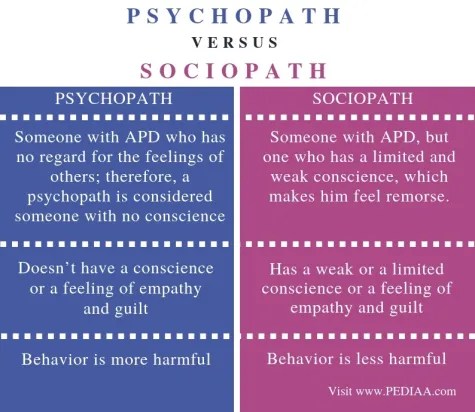
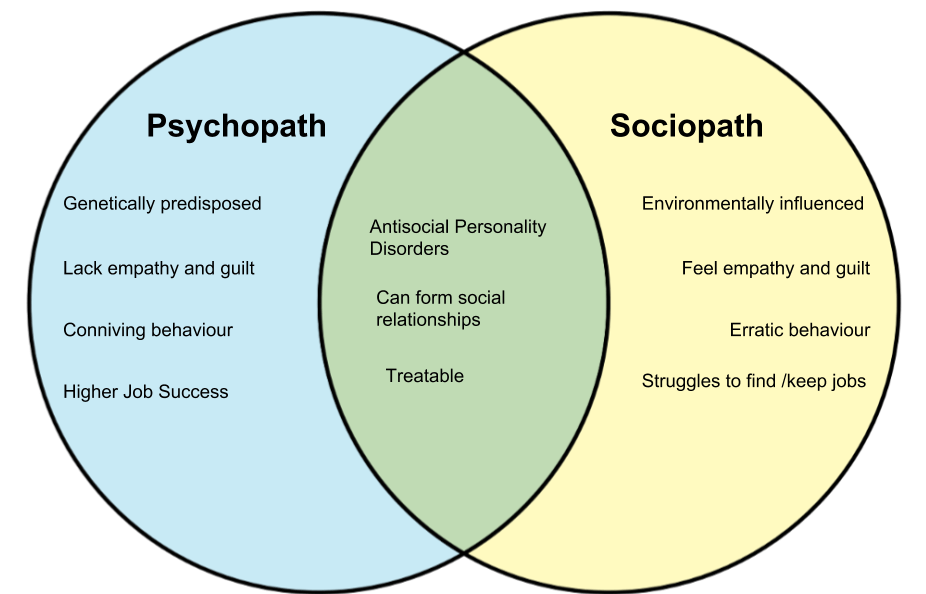
Psychopath vs. Sociopath

Psychopath and sociopath are similar terms, but have different meanings. See the charts provided below, as they discuss the primary differences between the two terms.

Psychopath versus Sociopath Chart

Psychopath versus Sociopath Venn Diagram

Images obtained by pediaa.com (top) and relatablethoughts.wordpress.com (bottom).


Final Thoughts

In summary, individuals possessing many of these traits are incredibly mentally and emotionally unhealthy to be around. However, it is rather tricky to pinpoint these behaviors until you have spent a lot of time with the Dark Triad individual. Often, the behaviors begin subtly and go unnoticed until you are fully invested with the individual. Although I believe we should give a person the benefit of the doubt in many circumstances, we should never completely ignore red flags, no matter how small they may seem. It could save you a lot of time and heartache. I will discuss red flags and the typical “relationship” stages of being involved with an individual with these traits in my next couple of posts.

Until then,

Take Care Signature
Take Care + Heart

Take Care

Welcome to my blog!

Hello all,

I wanted to take a moment to discuss the name of my blog. “Take care” is often something you might say to a loved one when you are telling them goodbye. The intention behind this farewell statement is usually focused on traveling safely or, in recent times, using extreme caution to protect yourself and others from contracting COVID-19. To me, “take care” means to be cautious of your overall wellbeing which includes but is not limited to physical, mental, and emotional health.

We typically know what it means to take care of our physical wellbeing; however, the lines become blurred in regards to mental and emotional wellbeing.

Mental and emotional health are virtually dependent upon one another – emotions effect thoughts and thoughts effect emotions. However, the emotional and mental battles we have with ourselves are not evident to the outside world. Individually, we are the only ones that truly know how we feel or how certain events in our lives have impacted us. What may seem incredibly mild to one person could absolutely destroy another. Trying to communicate our feelings and experiences is another challenge all on its own. In my research and readings about mental health, an example really stuck out to me: imagine trying to explain how a strawberry tastes to someone who has never eaten a strawberry. Take a moment and think how challenging that would be. The person would never truly be able to understand what a strawberry tastes like unless they ate one themselves.

This is the perfect example in regards to mental health and related issues. Unless you have experienced it yourself, you truly cannot understand the magnitude of it. Additionally, every experience we have in life shapes how we respond to future experiences. This is why a single event may not effect one person as severely as another. It is also important to note that most people do not share every detail of their life with us. We only know as much a person chooses to share with us. And even when someone does share their stories or discusses difficult moments in their life, the negative effect of the events are not always disclosed.

Moreover, many people may also display various negative behaviors in response to how certain life events have impacted them. The internal struggles an individual faces may also effect their behaviors. This is so important to remember with every interaction we have with another person.

Further, mental and emotional issues are not “one size fits all”; therefore, it can be challenging to figure out what we should do to take care of our mental and emotional wellbeing. Unfortunately, these strategies are not taught in school and oftentimes not taught at home. Many of us are left wondering what we can do to improve our situation and not knowing where to turn for answers. It is my hope that the information I share will help someone find those answers or serve as a guide for taking care of your own mental and emotional health.

Additionally, our mental and emotional wellbeing can impact others. Our actions and behaviors are strongly related to our thoughts and emotions. Our actions and behaviors impact the people we are around; thus, effecting the way they think and feel about themselves. Therefore, we must become self-aware, take time to self-reflect, and seek self-help when necessary. Not just for ourselves, but for the impact we have on others as well.

It is equally important to consider our role in supporting individuals who may be visibly or silently suffering. Remember, many people do not show they are suffering to the outside world and even if they do, the impact of their suffering is not always disclosed. I’m a firm believer that we must take care of not only our mental and emotional health, but also that of other individuals. Don’t get me wrong, I do not believe we should assume full responsibility for someone else’s mental and emotional health. However, I do believe we must make an effort to show kindness, grace, empathy, and compassion to each other in order to motivate others to help themselves and not minimize the impact of another’s suffering. It is the intention behind our words, actions, and behavior that can mean the difference in someone seeking professional help or adding fuel to the fire that leads someone to their breaking point.

So first and foremost, we must take care of and assume responsibility for our own mental and emotional health. Once we have made those improvements in our own lives, I believe we should essentially “take care” of others by being kind, supportive, and provide encouragement as they embark on their own journey of managing, or in some cases recovering, from their mental and emotional issues.

In summary, my blog was named “Take Care,” as a reminder to take care of your own mental and emotional health; then, support and encourage others who may be struggling or suffering as well. I will be sharing information that has helped me on my journey of improving my own mental health including but not limited to personal examples, articles, books, and various strategies. Additionally, I want to offer support to others on their journey in taking care of their own mental and emotional health. If you have questions or would like to share your own personal tips or stories, feel free to leave a comment below!

Take Care Signature