What are cognitive distortions?
Cognitive distortions are negative thinking patterns that are not based in fact and do not reflect reality. These patterns create an unrealistic – and usually negative – perception leading you to have negatively biased feelings about situations and events. Cognitive distortions are not a mental illness. In fact, it is completely normal to have the occasional cognitive distortion. However, if these thinking patterns are reinforced over time, then it can increase mental health issues including, but not limited to, anxiety and depression.
Luckily, you can change your thinking patterns to improve your mental well-being! Before we talk about how to change these patterns, let’s dive into some of the most common cognitive distortions. For the sake of being thorough, I have included examples on both the negative and positive ends of the spectrum.
The Twelve Most Common Cognitive Distortions
- All-or-Nothing Thinking
- Overgeneralization
- Mental Filter
- Discounting The Facts – Positive + Negative
- Jumping to Conclusions – Mind-Reading + Fortune-Telling
- Magnification + Minimization
- Emotional Reasoning
- “Should” Statements
- Labeling
- Blame
- Personalization
- Catastrophic Thinking
All-Or-Nothing Thinking
All-or-nothing thinking is when a person habitually thinks in extremes without considering all the facts of the situation. This is also called “black-and-white” thinking – shades of grey do not exist.
For example: When you fail, you may tell yourself you are a total failure. Or when you succeed, you tell yourself that you’re a winner and you’re the best there is.
Overgeneralizing
Overgeneralizing is when a person reaches a conclusion about one event and applies that conclusion to all subsequent events – thinking one negative (or positive) event will be a never-ending series of negative (or positive) events.
For example: When you are rejected by someone you like, you tell yourself you are unlovable and will be alone forever. Or when you overcome a negative event and things are going well again, you may tell yourself that all problems are solved, you will never face another problem again, and will be happy forevermore.
Mental Filtering
Mental filtering is when a person ignores all positives and only focuses on the negatives, or vice versa.
For example: When you go to work with a new haircut, you might have 10 people comment and tell you how great your new style looks. But the 11th person asks you why you changed your style or says he//she liked your hair better before, so you focus on the one negative comment and wear a hat to work until it grows back. Or when you go out to dinner with a friend, you tell yourself you will feel so much better after having a drink, completely ignoring the fact you typically drink too much and end up with a hangover the next day.
Discounting The facts
Discounting the facts is very similar to mental filtering. The difference is that instead of dismissing or ignoring the positives or negatives as a person with a mental filter would, you explain the positives or negatives away as if they “don’t count” to maintain universally negative or positive thoughts.
For example – discounting the positive: When a person gives you a genuine compliment, you tell yourself they are only saying that to make you feel good. Or – discounting the negative: When you get into an argument with someone, you become defensive and insist the other person is wrong dismissing their concern completely without seeing their perspective regarding the situation at hand.
Jumping to Conclusions
Jumping to conclusions is when you reach a conclusion that is not supported by the facts. There are two common forms: Mind-Reading and Fortune-Telling.
Mind-Reading
Mind-reading is when you assume you know how others are thinking or feeling. Try to avoid getting this confused with empathy – the ability to perceive or understand what someone may be feeling. If you need help distinguishing between the two, consider all of the facts of the situation. Avoid focusing on the facts that would only confirm your suspicions.
For example: When you’re at a party and you don’t know many people there, you start to feel shy and withdrawn, telling yourself others would look down on you if they knew you felt shy. Or when you’re in a relationship with someone, you tell yourself that everything is going great while the other person is actually frustrated or unhappy with you.
FORTUNE-TELLing
Fortune-telling is when a person predicts the way a future event will take place.
For example: When you are depressed, you may tell yourself you will never feel better and will never be happy again. Or when you go out to dinner, you may tell yourself you will just have one drink and everything will be fine, while you know you have never stopped after one drink in the past and more often than not, things do not turn out fine.
magnification + minimization
Magnification and minimization occurs when you either blow things out of proportion or significantly reduce their importance.
For example – magnification: When you are procrastinating, you think of everything you need to do and tell yourself how daunting each task will be. Or when you’re trying to eat healthier, you see the ice cream in your freezer and tell yourself how delicious it will be.
For example – minimization: When you’re procrastinating, you tell yourself that your efforts today won’t make any difference tomorrow so you might as well wait another day. Or when you see the ice cream in your freezer, you debate whether or not it will actually be good enough to give in to the urge.
Emotional Reasoning
Emotional reasoning is when you reason from your feelings versus the facts. In reality, your feelings are a direct result of your thoughts and not from what is actually happening. If your thoughts are distorted, then your feelings will be misleading as well.
For example: When you procrastinate, you tell yourself “I’ll complete my report when I’m in a better mood – I just don’t feel like it right now.” The time never comes and you miss the deadline so you tell yourself, “I feel useless so I must be useless.” Or when you meet someone really attractive, you may feel so happy and excited that you think he or she must be the person of your dreams.
Emotional reasoning is tricky because it is important to validate your emotions about a situation or event. However, when it comes to judging your reality, you must stay focused and rooted in the actual evidence.
“Should” Statements
“Should” statements can be self-directed, other-directed, or world-directed. These statements occur when a person believes something “should have” happened a certain way or that the person (or someone else) “should have” done something that they didn’t or are unable to do.
For example – self-directed: When you make a mistake, you tell yourself “you shouldn’t have made such a stupid mistake.” Or when you’ve had a tough day, you tell yourself “I’ve had a stressful day and I should have a drink.” – all the while, knowing that is not the best choice for you to make.
Labeling
Labeling is when you label yourself or someone else in a particular way after an event. It is an extreme form of overgeneralization.
For example: When you’re not getting along with someone, you label them as an incompetent loser. Or when you do well, you may tell yourself you are special and a winner. As a side note, this is often used as a motivational strategy by coaches and motivational speakers – but in reality, no one wins or loses all the time.
BLAME
Blaming occurs when you find fault with yourself (self-blame) or others (other-blame).
For example – self-blame: When you’re depressed, you may beat yourself up over all of your mistakes and shortcomings instead of using your energy to come up with solutions to your problems. Or – other-blame: When you have a conflict with someone, you tell yourself the other person is to blame for everything and that you are the victim and completely overlook your own role in the issue.
Personalization
Personalization is when you take things personally, but in reality, they are not connected to you in any way at all.
For example: When you get a note from your child’s teacher at school stating he or she isn’t doing well, you blame yourself for not being a good mother. Or when you see one of your friends has posted a story on a social media platform and he or she is out without you, you assume he or she doesn’t really like you and intentionally left you out.
Catastrophic Thinking
Catastrophic thinking occurs when a person assumes the worst in a situation where the outcome is unknown and there is lack of evidence to support his or her prediction. When people engage in catastrophic thinking, a typical worry can escalate and create an unnecessary amount of anxiety.
For example: When you call your mom, she doesn’t answer. You try calling again – no answer. You try again and still no response. Then, you begin to think she has been in a tragic accident and you will never see her again. When in reality, she was taking a nap and her phone was on silent.
It is important to note this doesn’t mean a person is “overreacting” – people who have experienced repeated and//or ongoing traumatic events are more likely to fear the worst outcome in many circumstances.
Challenging Cognitive Distortions
Now that we know the most common cognitive distortions, let’s discuss how we can change these thought patterns when they pop up.
- Identify the thought
- Reframe the thought
- Perform a cost-benefit analysis
- Perform a behavior-chain analysis
- Consider why you may feel and think this way
- Consider therapy // Cognitive Behavioral Therapy
Identify the thought
When you notice yourself engaging in negative thinking, take a few minutes to analyze your thought process that led to your conclusion. Is there evidence supporting this thought? Is this conclusion rooted in feelings or facts? Do you have biases that would influence this thinking?
Reframe the thought
“Try on a different pair of lenses” and approach the situation from a different perspective. Look for alternative explanations, objective evidence, and positive considerations. It might be helpful to write down your initial thought along with several other alternatives.
Perform a cost-benefit analysis
More often than not, people will repeat behaviors and patterns that will deliver a benefit to some degree. Ask yourself tough questions. For example, how have these thought patterns helped me cope in the past? Do I gain a sense of control by engaging in these thoughts when I would otherwise feel powerless? Do these thoughts allow me to avoid taking a risk? Or do they allow me to escape accountability?
You can also start by weighing out the pros and cons of your thought processes – what do you gain and what do you lose by these thoughts?
Perform a behavior-chain analysis
A behavior-chain analysis is a 5-step process allowing you to identify what contributed to your thoughts. Here is a basic outline:
- What are you feeling?
- What events led up to this?
- What vulnerability factors could be contributing to this? Lack of food? Lack of sleep? Substance misuse or abuse?
- What thoughts are you thinking? Write them down and see if you notice any cognitive distortions.
- Use logical solutions to navigate through your thoughts to transform them into a more positive way of looking at the situation.
Consider why you may think or feel this way
Think about the conclusion you made and how you got to that point. Determine if any preconceptions may have influenced how you came to this conclusion.
Consider Therapy // Cognitive Behavioral Therapy (CBT)
CBT is a form of talk therapy that teaches you to identify, interrupt, and change unhelpful and unhealthy thinking patterns.
If you’re looking for a therapist, you can go to psychologytoday.com to search for a local therapist who is properly trained and accepts your insurance.
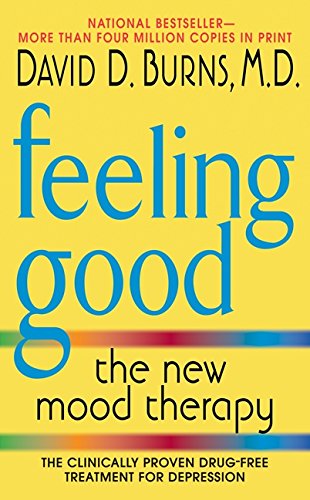
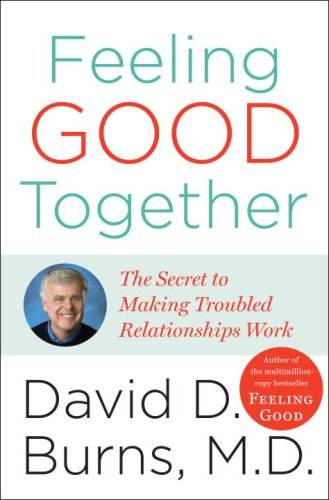
If you aren’t interested in talking with a therapist, I highly recommend reading the book Feeling Good: The New Mood Therapy by Dr. David Burns. I have read this book cover to cover and it truly changed my life for the better. If someone ever asks me for advice, I recommend this book every single time!
If you have any other helpful tips or suggestions, leave a comment!







 Main + Meg